Oh Zee shares his opinion on Politics, Business, Food, Clothing, Music, and Movies, both locally, and on an International level.
Pages
SEARCH
Custom Search
Showing posts with label quote. Show all posts
Thursday, July 19, 2012
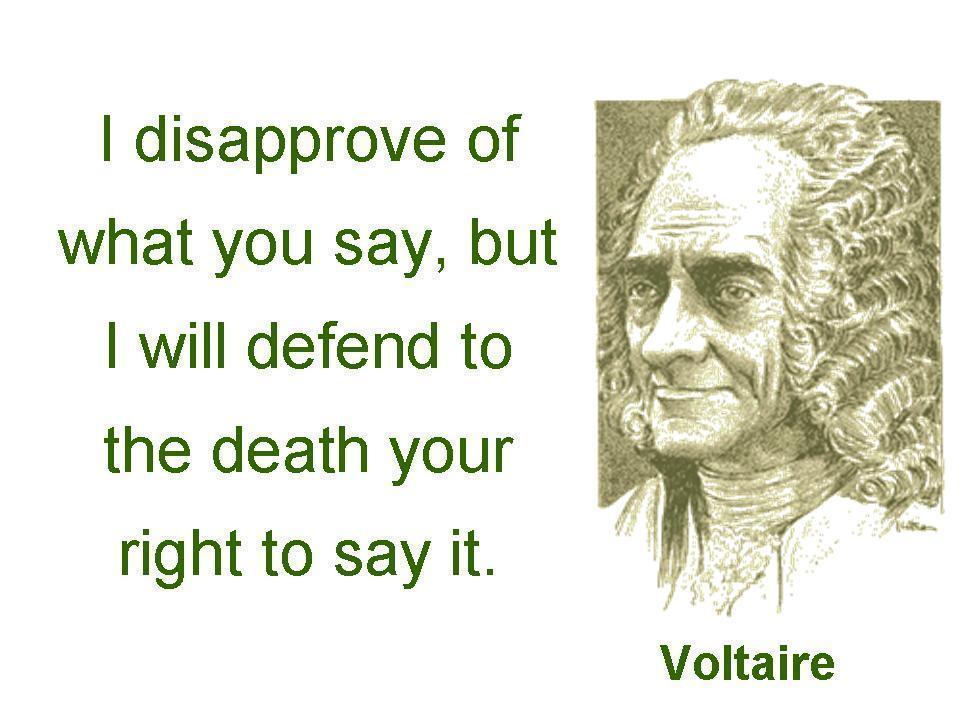
SAY WHAT YOU FEEL, REGARDLESS OF OTHERS FEELINGS
Labels:
amendment,
bay area,
beheaded,
feedburner,
first,
freedom,
gay marriage,
hard to find,
jump,
knowledge,
mp3,
OZ,
quote,
seeking,
speech,
tell me,
truth,
voltaire,
wisdom,
wise man
Location:
Stockton, CA, USA
Tuesday, May 8, 2012
Oh Zee's Quote of the day
"Do as you have been taught, and the world will change a whole lot." -- Oh Zee May 8th
Only in America!
Only in America!
Labels:
california,
einstein,
genius,
german,
Giants,
GOP delegates,
greg pitsch,
handmade,
Hunter S Thompson,
iphone,
IQ,
jet fuel,
lawyer,
music,
New Hip Hop,
new to the site,
of the day,
OhZee,
quote
Location:
Manteca, CA, USA
Wednesday, April 18, 2012
ALAN WATT: A Brief Debriefing on Reality
Alan Watt Speaks Some Truth about Reality. He is one of the sharpest minds on the planet, among the greats, einstein, chopra, jobs and hawking.
B2B Business
Labels:
academia,
alan watt,
AW,
education,
feedburner,
genius,
Hunter S Thompson,
ipad,
IQ,
jenna,
man,
medical marijuana,
NASA,
Oh Zee,
quote,
reality,
weather,
wisdom
Location:
Sacramento, CA, USA
Saturday, March 31, 2012
Oh Zee's Quote of the day
"When we as a country can no longer question the fact that our civil liberties are being stripped, it is time we fight for our rights!" - Oh Zee
Thursday, March 29, 2012
Thom Stockton - Real Rapper
There are too many rappers - TRUE!
But there are only a few REAL musicians, that are speaking on the gift of life, not drugs, cars, and H%*$. Thom, the time is now for the good-hearted people in this city to rise above the Cheating Criminal Cowards.
Wednesday, March 14, 2012
Tuesday, March 6, 2012
Santorum On Romney: 'He's Not Someone You Can Trust'
COLUMBUS, Ohio -- Rick Santorum said that Mitt Romney has misled voters about his position on a federal mandate for individuals to purchase health insurance, hammering his primary opponent hard one day before Ohio voters go to the polls.
"During the heart of the debate on Obamacare, Mitt Romney stepped forward in 2009 and advocated for a mandate, an individual mandate. Taxing people who did not buy insurance, that is an individual mandate," Santorum said on a conference call organized abruptly by his campaign, between campaign events.
Santorum was referring to a 2009 op-ed in USA Today, written by Romney, that came to light over the weekend.
"People are starting to realize that what you have with Governor Romney is someone who is simply not a genuine article, he's not someone you can trust on the issue of big government," Santorum said.
"Then for Mitt Romney to do what he's done on repeated occasions, to mislead the public as to what his position was, to continue to mislead, and to try to obfuscate by just throwing negative ads at someone and not having to respond to the fact that he was an advocate for something he says he wasn't, it's firm evidence that conservatives will not trust him, will not rally around him through this primary season," Santorum said.
"And ultimately, I don't care how much money he will spend, we will be the nominee," he thundered.
The Romney campaign responded with the same defense that their candidate has consistently used when criticized for the health care overhaul he signed into law as Massachusetts governor in 2006.
"Rick Santorum has a habit of creating distortions, exaggerations and falsehoods about Mitt Romney’s record. Over the last several years, Governor Romney has said many times, in many different formats, that his health care reform plan was the right model for Massachusetts, and that it should not be used as a one-size-fits-all national health insurance plan," said Romney spokeswoman Andrea Saul. "Governor Romney is a federalist and has always said that states should be free to come up with their own health care reforms."
The problem with the 2009 op-ed is that there is no mention by Romney of what has been a standard line: each state should be free to take the approach they think is best.
Romney has made comments over the years, particularly in a 2007 appearance on NBC's "Meet the Press," that he thought a mandate approach could serve as a national model.
It is a good issue for Santorum to hit Romney on, and he is clearly trying to regain the offensive in Ohio to stop a repeat of last week's result in Michigan. Santorum held a large lead in Michigan, only to see Romney's edge in money and TV advertising help his opponent to a victory.
Santorum also started to spin the results in Ohio ahead of time, just as his campaign tried to do last week. He pointed out that Romney and a super PAC supporting Romney are outspending him by a margin of 12 to 1.
"To suggest this is David and Goliath is probably a little bit of an understatement," Santorum said. "No matter what the result is tomorrow in Ohio, we're going to feel great because under that barrage we stood tall, we stood on principle, and we were able to come out and run a great race in this state."
The reality is, if Santorum loses Ohio, it will be very hard for him to argue he is still competing with Romney.
Labels:
209,
gas,
GOP,
Primary,
quote,
race,
republican,
rick,
Ron paul,
today,
touchscreen,
us,
USA
Dozens arrested protesting education cuts at California
By Greg Lewis
SACRAMENTO, California (Reuters) - Dozens of protesters angry over fee hikes and budget cuts at California's public universities were arrested on Monday night during a boisterous but peaceful demonstration inside the state Capitol building.
The arrests capped a day in which hundreds of students and others marched on the statehouse and rallied outside the Capitol before many of the activists moved the demonstration inside the building, clogging hallways in and around the rotunda.
One group chanted, "No cuts, no fees. Education must be free," as they sat crossed-legged on the black-and-white tiled floor of the statehouse. The California Highway Patrol, which provides security for the building, said the demonstrators had a permit to protest inside the Capitol until 5:30 p.m. local time, and then were ordered to leave.
Police warned the protesters seven times after the building closed at 6 p.m. that they faced arrest for trespassing if they failed to disperse, and officers moved in to begin taking the demonstrators into custody at about 7:30 p.m.
"We wanted to give them every opportunity," CHP Captain Andy Menard said, adding that the estimated 45 to 50 demonstrators arrested were all given one last chance to leave the building before they were taken into custody.
"The ones who didn't are going to jail," he said.
The demonstration drew words of support from Governor Jerry Brown, a Democrat, who issued a statement saying the protesters "are reflecting the frustration of millions of Californians who have seen their public schools and universities eroded year after year."
He urged public support for a ballot initiative in November calling for a temporary tax increase to raise additional revenues for public education in the state, which is facing a $9.2 billion budget shortfall.
Some of the demonstrators also sought to collect signatures for a petition to put a measure on the ballot that would impose an extra 1 percent tax on individuals with annual incomes of $1 million or more.
(Additional reporting by Adam Weintraub; Editing by Steve Gorman and Tim Gaynor)
Labels:
America,
CA,
hollywood,
Mitt Romney,
occupy,
Oh Zee,
oil,
protest,
quote,
r,
rights,
Sacramento,
SF Bay Area,
stockton,
truth
Location:
Sacramento, CA, USA
Official defends 'lethal force' against US citizens
US Attorney General Eric Holder on Monday defended the government's use of "lethal force," even against American citizens abroad, as part of the effort to protect the nation against terror attacks.
The speech marked the first time a senior US official has publicly justified in legal terms the drone attacks that are believed to have killed at least three US citizens on foreign soil in recent months, including key Al-Qaeda figure Anwar al-Awlaqi.
"Given the nature of how terrorists act and where they tend to hide, it may not always be feasible to capture a United States citizen terrorist who presents an imminent threat of violent attack," Holder said in a speech at a law school in Chicago.
"In that case, our government has the clear authority to defend the United States with lethal force."
Holder said there were circumstances under which "an operation using lethal force in a foreign country, targeted against a US citizen who is a senior operational leader of Al-Qaeda or associated forces, and who is actively engaged in planning to kill Americans, would be lawful."
Such circumstances included that a thorough review had determined the individual posed "an imminent threat of violent attack against the United States" and that "capture is not feasible."
Thirdly, the "operation would be conducted in a manner consistent with applicable law of war principles," Holder told the audience at the Northwestern University School of Law.
"Some have called such operations 'assassinations.' They are not... assassinations are unlawful killings," Holder said.
"Our legal authority is not limited to the battlefield in Afghanistan... We are at war with a stateless enemy, prone to shifting operations from country to country," he added.
"Our government has both a responsibility and a right to protect this nation and its people from such threats." Civil rights groups have cried foul since the killing of Awlaqi in Yemen in September in a US raid.
Some argued it was illegal for the US military to kill an American citizen on the battlefield, following no attempt to indict him. US intelligence officials believed Awlaqi was linked to a US army major charged with shooting dead 13 people in 2009 in Fort Hood, Texas, and to a Nigerian student accused of trying to blow up a US airliner on December 25, 2009.
President Barack Obama said in September that Awlaqi's killing was a "major blow" to Al-Qaeda's Yemeni branch, and marked "another significant milestone in the broader effort to defeat Al-Qaeda and its affiliates."
The American Civil Liberties Union (ACLU) last month filed a lawsuit seeking the release of documents authorizing targeted drone strikes, such as the one on Awlaqi.
US citizen Samir Khan was killed in the same attack on Awlaqi, and Awlaqi's US-born teenage son was killed in October in a separate suspected US air strike in Yemen.
Friday, March 2, 2012
HOW SANTORUM REJECTS THE CONSTITUTION
More than anything else, the U.S. Constitution is an outline of the concept of federalism. Federalism is the very basis, or is supposed to be the very basis, of American government. This doesn’t register one bit with Rick Santorum. Writes Ann Coulter:
Even when I agree with Rick Santorum, listening to him argue the point almost makes me change my mind.
I also wonder why he’s running for president, rather than governor, when the issues closest to his heart are family-oriented matters about which the federal government can, and should, do very little.
It’s strange that Santorum doesn’t seem to understand the crucial state-federal divide bequeathed to us by the framers of our Constitution, inasmuch as it is precisely that difference that underlies his own point that states could ban contraception.
Of course they can. States could outlaw purple hats or Gummi bears under our Constitution!
State constitutions, laws, judicial rulings or the people themselves, voting democratically, tend to prevent such silly state bans from arising. But the Constitution written by James Madison, et al, does not prevent a state’s elected representatives from enacting them.
The Constitution mostly places limits on what the federal government can do. Only in a few instances does it restrict what states can do.
A state cannot, for example, infringe on the people’s right to bear arms or to engage in the free exercise of religion. A state can’t send a senator to the U.S. Congress if he is under 30 years old. But with rare exceptions, the Constitution leaves states free to govern themselves as they see fit.
In New York City, they can have live sex clubs and abortion on demand, but no salt or smoking sections. In Tennessee, they can ban abortion, but have salt, creches and 80 mph highways. At least that’s how it’s supposed to work.
And yet when Santorum tried to explain why states could ban contraception to Bill O’Reilly back in January, not once did he use the words “Constitution,” “constitutionally,” “federalism,” their synonyms or derivatives. Lawyers who are well familiar with the Constitution had no idea what Santorum was talking about.
He genuinely does not seem to understand the Constitution’s federalist framework, except as a brief talking point on the way to saying states can ban contraception…
If he truly believed in the Constitution, Santorum wouldn’t be promoting big social programs out of the federal government, such as tripling the child tax credit exemption and voting for “No Child Left Behind.”
No federalist can support this man.
For those who claim to be “constitutional conservatives” supporting Santorum basically renders that label meaningless. Santorum has repeatedly attacked the 10th amendment, which most of the Founders considered the strongest emphasis possible of what the entire Constitution was really all about. I made this same point about Santorum, his ignorance of the Constitution and his rejection of federalism at The Daily Callerearlier this week.
Thursday, March 1, 2012
Stockton Going Broke Shows Cop Pay Rising as California Property Collapsed
By Alison Vekshin
The bankruptcy that Stockton (3654MF), California, resisted for three years is now at its doorstep, spurred by the weight of retiree costs, the housing bust and accounting blunders that drained the city’s coffers.
Stockton, 80 miles (130 kilometers) east of San Francisco, rode the boom-and-bust cycle of the 2000s with a surge in new- home construction that attracted buyers seeking an affordable alternative to Bay Area real estate. Then a crash came, as homeowners faced a wave of foreclosures that sapped the city’s tax-revenue gains.
The city born in the gold rush has struggled for decades, relying on revenue from farming and shipping at its river port. Meanwhile it granted employees some of the state’s most generous benefits, and now has 94 retirees with pensions of at least $100,000 a year -- more than twice as many as some comparably- sized California cities. It has a history of ethnic tension and the notoriety of a 1989 schoolyard shooting in which five children were gunned down.
“We’re really struggling,” City Council member Dale Fritchen, 51, said by telephone Feb. 28. “There were horrible decisions made. City leaders spent money faster than it was coming in, thinking that the gravy train would never go away.”
This week, Stockton moved closer to bankruptcy with a City Council decision to preserve cash by defaulting on $2 million in bond payments. It also voted to begin a mediation process required under state law prior to seeking court protection. The city said its goal is to avoid bankruptcy. If it files, it would be the most populous U.S. city to do so.
Bankruptcy Code
From California to Rhode Island, cities are using the federal bankruptcy code to get out from under billions of dollars in obligations they can’t afford. Central Falls, Rhode Island, filed for protection in August after failing to win concessions from its unions. Jefferson County, Alabama, turned in the biggest municipal bankruptcy in U.S. history last November, with $4.2 billion in debt. Vallejo, California, sought Chapter 9 reorganization in 2008.
Stockton’s unemployment rate soared to 17.3 percent in 2010, the country’s sixth-highest, from 7 percent in 2000, according to the California Employment Development Department. The foreclosure rate in the Stockton metropolitan area was the second-highest in the U.S. last year, after Las Vegas, according to Irvine, California-based RealtyTrac Inc. Violent crime in the Stockton area was the eighth-highest rate in the nation in 2010, according to FBI data.
Gold Rush
Stockton was founded in 1849 as a supply center for people rushing to work in mining, a year after gold was discovered on the American River east of Sacramento. Early settlers flocked from eastern states and from Asia, Europe and Africa.
Later, shipbuilding became a major industry in Stockton, with its deep-water port on the San Joaquin River. Agriculture surged as the region supplied asparagus, cherries, tomatoes, walnuts and almonds.
In the 1990s, city officials doled out generous retirement health benefits without ensuring the city could afford the payments over time, City Manager Bob Deis said at a Feb. 24 news conference. A worker employed as little as a month could qualify for city-paid retirement health care for the retiree and his or her spouse for life, Deis said.
“It was not a Cadillac plan,” Vice Mayor Kathy Miller said in a telephone interview. “It’s a Lamborghini plan. No one in the private sector had anything like that.”
Among expenses the city can no longer afford is a $417 million unfunded retiree health-care liability.
‘Nobody Asked’
“The problem is, nobody asked the question: ‘How do you fund it?’ And consequently there was no money set aside to fund those commitments,” Deis said. “It was an unsound decision and it has similarities to a Ponzi scheme.” In the 2000s, as housing prices soared in San Francisco and Silicon Valley, buyers from San Jose to Oakland seeking affordable alternatives flocked to Stockton, where starter homes cost around $400,000. Single-family home construction, which had averaged 2,500 units a year from 1991 to 1997, tripled to 7,500 annually from 2003 and 2005, according to Robert Denk, senior economist at the Washington-based National Association of Home Builders.
The city’s population grew 20 percent in a decade, to 291,707 in 2010 from 243,771 in 2000, driven by a surge in Hispanics who identify themselves as Mexican, according to U.S. Census Bureau data. That ethnic group jumped 56 percent in the period, to 104,172 from 66,900, while the black population grew 30 percent and the Asian population rose 29 percent, Census figures show.
‘Boom Time’
“Money was just pouring into the city coffers for development fees and permits,” Miller said. “Property taxes were going through the roof. It was boom-time.”
Pay and benefit packages continued to swell. In 2005, the city completed a new ballpark and arena on the waterfront using bond funds. “There was an unspoken policy that to keep the unions from complaining about the amount of money being spent on projects, the easiest way to do that was to continue sweetening their compensation packages,” Miller said.
Among those measures were automatic salary increases regardless of whether the city had the revenue to support them. The contract with the fire union required the city to compare its pay with that of 16 cities including Huntington Beach, Anaheim and Torrance. Stockton firefighters’ salaries were required to rank fifth-highest, according to the city’s May 2011 emergency declaration document.
$100,000 Pensions
Stockton retirees also fared well. The 94 with pensions of more than $100,000 compares with 38 in Bakersfield, which has 347,000 residents, and 35 in Chula Vista, with a population of 244,000, according to data compiled from state pension records by the California Foundation for Fiscal Responsibility, a Citrus Heights-based group that advocates pension reform.
An epidemic of foreclosures reached Stockton in 2007, as the recession left thousands of homeowners unable to afford their mortgages. Home construction collapsed and housing prices plummeted.
Revenue dwindled to an estimated $161.8 million in fiscal 2012 from $203.1 million in fiscal 2009. The city fired 25 percent of its workforce.
In Stockton’s San Joaquin County, assessed property values tumbled almost 11 percent in fiscal 2010, followed by 3.9 percent in 2011 and 4 percent in the current year, according to the county’s website.
‘Drastic Decisions’
“In the beginning, when this whole economic bubble burst, everyone had the attitude, ‘We’ll just avoid making drastic decisions and in a year or two things will be back to normal,’” Miller said.
The base pay for a Stockton police officer can be as much as $76,860, while a sergeant’s can reach $90,836, according to data provided by the city. In 2010, 87 percent of police officers got additional pay that added 8.7 percent for a canine handler, 4.3 percent for SWAT and 5 percent in “longevity pay” at six years of service. All are included in the calculation of retirement benefits.
“We are now the fifth-lowest paid police organization in the county where we handle the majority of the calls,” Kathryn Nance, a Stockton Police Officers’ Association board member, said in a telephone interview.
By 2009, city officials began considering bankruptcy.
Bankruptcy Protection
Fritchen, the council member, asked the city attorney’s office to lay out the pros and cons of bankruptcy protection at a budget committee meeting.
A year later, in May 2010, the city declared a fiscal emergency to deal with a $23 million deficit. The declaration allowed the city to make changes to existing labor contracts.
Crime escalated as the police force was reduced by about 27 percent to 324 sworn officers from 441, according to Pete Smith, a police spokesman. There were a record 58 homicides last year, most involving gang violence, Smith said.
“We’re losing our grip on some of the more troubled neighborhoods and don’t have the ability to police the city as proactively as we did,” Smith said.
In the spring of 2011, Deis met with about 15 police employees and budget officials to seek concessions from the union.
‘Breaking Our Contract’
“He said if we continue to fight on them breaking our contract, then he is going to push the reset button and go bankrupt and we will all lose,” Steve Leonesio, president of the police union, said in a telephone interview. The union is suing the city, challenging its authority to reduce benefits under the emergency declaration.
Last year, city officials uncovered bookkeeping errors requiring $15 million in budget cuts that “will have the effect of stripping Stockton’s cupboards bare,” Deis said.
The mistakes included double-counting of $500,000 in parking-ticket revenues and overstating the city’s available balance by an estimated $2.8 million.
On Feb. 24, Deis walked into a news conference at City Hall and announced that the errors and the recession represent “the knockout blow” for the city’s finances. He recommended the city invoke the state bankruptcy law. “We see no viable alternative,” he said.
Stockton, 80 miles (130 kilometers) east of San Francisco, rode the boom-and-bust cycle of the 2000s with a surge in new- home construction that attracted buyers seeking an affordable alternative to Bay Area real estate. Then a crash came, as homeowners faced a wave of foreclosures that sapped the city’s tax-revenue gains.
The city born in the gold rush has struggled for decades, relying on revenue from farming and shipping at its river port. Meanwhile it granted employees some of the state’s most generous benefits, and now has 94 retirees with pensions of at least $100,000 a year -- more than twice as many as some comparably- sized California cities. It has a history of ethnic tension and the notoriety of a 1989 schoolyard shooting in which five children were gunned down.
“We’re really struggling,” City Council member Dale Fritchen, 51, said by telephone Feb. 28. “There were horrible decisions made. City leaders spent money faster than it was coming in, thinking that the gravy train would never go away.”
This week, Stockton moved closer to bankruptcy with a City Council decision to preserve cash by defaulting on $2 million in bond payments. It also voted to begin a mediation process required under state law prior to seeking court protection. The city said its goal is to avoid bankruptcy. If it files, it would be the most populous U.S. city to do so.
Bankruptcy Code
From California to Rhode Island, cities are using the federal bankruptcy code to get out from under billions of dollars in obligations they can’t afford. Central Falls, Rhode Island, filed for protection in August after failing to win concessions from its unions. Jefferson County, Alabama, turned in the biggest municipal bankruptcy in U.S. history last November, with $4.2 billion in debt. Vallejo, California, sought Chapter 9 reorganization in 2008.
Stockton’s unemployment rate soared to 17.3 percent in 2010, the country’s sixth-highest, from 7 percent in 2000, according to the California Employment Development Department. The foreclosure rate in the Stockton metropolitan area was the second-highest in the U.S. last year, after Las Vegas, according to Irvine, California-based RealtyTrac Inc. Violent crime in the Stockton area was the eighth-highest rate in the nation in 2010, according to FBI data.
Gold Rush
Stockton was founded in 1849 as a supply center for people rushing to work in mining, a year after gold was discovered on the American River east of Sacramento. Early settlers flocked from eastern states and from Asia, Europe and Africa.
Later, shipbuilding became a major industry in Stockton, with its deep-water port on the San Joaquin River. Agriculture surged as the region supplied asparagus, cherries, tomatoes, walnuts and almonds.
In the 1990s, city officials doled out generous retirement health benefits without ensuring the city could afford the payments over time, City Manager Bob Deis said at a Feb. 24 news conference. A worker employed as little as a month could qualify for city-paid retirement health care for the retiree and his or her spouse for life, Deis said.
“It was not a Cadillac plan,” Vice Mayor Kathy Miller said in a telephone interview. “It’s a Lamborghini plan. No one in the private sector had anything like that.”
Among expenses the city can no longer afford is a $417 million unfunded retiree health-care liability.
‘Nobody Asked’
“The problem is, nobody asked the question: ‘How do you fund it?’ And consequently there was no money set aside to fund those commitments,” Deis said. “It was an unsound decision and it has similarities to a Ponzi scheme.” In the 2000s, as housing prices soared in San Francisco and Silicon Valley, buyers from San Jose to Oakland seeking affordable alternatives flocked to Stockton, where starter homes cost around $400,000. Single-family home construction, which had averaged 2,500 units a year from 1991 to 1997, tripled to 7,500 annually from 2003 and 2005, according to Robert Denk, senior economist at the Washington-based National Association of Home Builders.
The city’s population grew 20 percent in a decade, to 291,707 in 2010 from 243,771 in 2000, driven by a surge in Hispanics who identify themselves as Mexican, according to U.S. Census Bureau data. That ethnic group jumped 56 percent in the period, to 104,172 from 66,900, while the black population grew 30 percent and the Asian population rose 29 percent, Census figures show.
‘Boom Time’
“Money was just pouring into the city coffers for development fees and permits,” Miller said. “Property taxes were going through the roof. It was boom-time.”
Pay and benefit packages continued to swell. In 2005, the city completed a new ballpark and arena on the waterfront using bond funds. “There was an unspoken policy that to keep the unions from complaining about the amount of money being spent on projects, the easiest way to do that was to continue sweetening their compensation packages,” Miller said.
Among those measures were automatic salary increases regardless of whether the city had the revenue to support them. The contract with the fire union required the city to compare its pay with that of 16 cities including Huntington Beach, Anaheim and Torrance. Stockton firefighters’ salaries were required to rank fifth-highest, according to the city’s May 2011 emergency declaration document.
$100,000 Pensions
Stockton retirees also fared well. The 94 with pensions of more than $100,000 compares with 38 in Bakersfield, which has 347,000 residents, and 35 in Chula Vista, with a population of 244,000, according to data compiled from state pension records by the California Foundation for Fiscal Responsibility, a Citrus Heights-based group that advocates pension reform.
An epidemic of foreclosures reached Stockton in 2007, as the recession left thousands of homeowners unable to afford their mortgages. Home construction collapsed and housing prices plummeted.
Revenue dwindled to an estimated $161.8 million in fiscal 2012 from $203.1 million in fiscal 2009. The city fired 25 percent of its workforce.
In Stockton’s San Joaquin County, assessed property values tumbled almost 11 percent in fiscal 2010, followed by 3.9 percent in 2011 and 4 percent in the current year, according to the county’s website.
‘Drastic Decisions’
“In the beginning, when this whole economic bubble burst, everyone had the attitude, ‘We’ll just avoid making drastic decisions and in a year or two things will be back to normal,’” Miller said.
The base pay for a Stockton police officer can be as much as $76,860, while a sergeant’s can reach $90,836, according to data provided by the city. In 2010, 87 percent of police officers got additional pay that added 8.7 percent for a canine handler, 4.3 percent for SWAT and 5 percent in “longevity pay” at six years of service. All are included in the calculation of retirement benefits.
“We are now the fifth-lowest paid police organization in the county where we handle the majority of the calls,” Kathryn Nance, a Stockton Police Officers’ Association board member, said in a telephone interview.
By 2009, city officials began considering bankruptcy.
Bankruptcy Protection
Fritchen, the council member, asked the city attorney’s office to lay out the pros and cons of bankruptcy protection at a budget committee meeting.
A year later, in May 2010, the city declared a fiscal emergency to deal with a $23 million deficit. The declaration allowed the city to make changes to existing labor contracts.
Crime escalated as the police force was reduced by about 27 percent to 324 sworn officers from 441, according to Pete Smith, a police spokesman. There were a record 58 homicides last year, most involving gang violence, Smith said.
“We’re losing our grip on some of the more troubled neighborhoods and don’t have the ability to police the city as proactively as we did,” Smith said.
In the spring of 2011, Deis met with about 15 police employees and budget officials to seek concessions from the union.
‘Breaking Our Contract’
“He said if we continue to fight on them breaking our contract, then he is going to push the reset button and go bankrupt and we will all lose,” Steve Leonesio, president of the police union, said in a telephone interview. The union is suing the city, challenging its authority to reduce benefits under the emergency declaration.
Last year, city officials uncovered bookkeeping errors requiring $15 million in budget cuts that “will have the effect of stripping Stockton’s cupboards bare,” Deis said.
The mistakes included double-counting of $500,000 in parking-ticket revenues and overstating the city’s available balance by an estimated $2.8 million.
On Feb. 24, Deis walked into a news conference at City Hall and announced that the errors and the recession represent “the knockout blow” for the city’s finances. He recommended the city invoke the state bankruptcy law. “We see no viable alternative,” he said.
Tuesday, February 28, 2012
Once Inside I Declared My Candidacy For Mayor
I am embarking on a quest, sort of a self challenge to test my own will by following the faith that I have been blessed with. This is a pivotal time in Stockton, as is around the world today. Some might be going about the day as if everything is fine, we the people need to Unite and form a more perfect Statehood, and soon show signs of progress. Being in charge of a city's financial management, how can you spend money that isn't there? Who is supposed to pay for it? I wish I could declare bankruptcy being 341 Million in the hole, I am sure I would have a city thriving on freedom of choice, and a more traditional feel to life here in the Central Valley.
All Delegates Belong to Ron Paul
No Other candidate has been awarded any delegates, but Ron Paul. Don't believe what they are telling you!
Sunday, February 26, 2012
Moody's downgrades Stockton's credit
STOCKTON, CA - Moody's downgraded Stockton's credit-worthiness Friday to below investment grade, affecting nearly $341 million of debt.
The rating for Stockton's 2007 pension obligation bonds were downgraded to Ba3 and 2006 lease revenue bonds were downgraded to B1.
"Moody's rates over 12,000 municipalities in the United States. Fewer than 30 are currently rated non-investment grade (Ba1 or lower)," Moody's spokesperson David Jacobson said. "With yesterday's downgrade, Stockton is now rated Ba2. The most notable city on the same list is Detroit, which is currently rated Ba3 and is under review for a potential downgrade."
Moody's also downgraded the city's water enterprise rating to A3.
Moody's decision to downgrade Stockton's credit-worthiness comes after city officials said they will vote Tuesday on whether or not to start the 60-day meditation period required before filing for bankruptcy.
During the meditation process, the city would suspend payments to creditors and work with them on payments. Stockton City Manager Bob Dies proposed that payments only be suspended for the rest of the fiscal year and payments would be made through other revenue sources.
RELATED STORY: Official: Bad money moves, bad luck got Stockton in trouble
Moody's Senior Vice President Eric Hoffmann said "the proposed suspension and entry into a mediation process demonstrates significantly reduced willingness, if not ability, to make full and timely debt service payments."
"The downgrade also reflects the city's indication that it is in the process of restating prior year audited financial results," Hoffmann added. "While this process is in its preliminary stages and only estimates have been released, the potential for restatement reduces the credibility of the city's financial reporting to date. The preliminary estimates released by the city indicate that adjustment to the city's fiscal 2010 audit report will likely be negative and material."
The highest rating is AAA.
"Moody's currently rates the state of California A1 with a stable outlook," Jacobson said. "California is our second lowest rated state. Illinois, rated A2, is the lowest."
Hoffmann said Stockton's credit rating could be further downgraded if the city files for bankruptcy.
Stockton city councilman Dale Fritchen and the Stockton police union have expressed concern over filing for bankruptcy.
"This will hurt Stockton, hurt my neighbors, my family, and my community," Fritchen said. "I'm putting everything in to make sure this doesn't happen."
In a statement, the union said the city is starting to work its way back financially, but filing for bankruptcy would be disastrous.
"Sales revenues are up and residents' confidence is coming back," the police union said in a statement. "Bankruptcy would send the city spiraling backward with no recovery in sight."
The union is calling for residents to show up at Tuesday night's council meeting and push for a public release of the city's budget.
News10/KXTV
Saturday, February 25, 2012
Quote of The Day
"Belief in yourself, can be very uplifting, do not let doubters get the best of you, and cause you to doubt yourself, that is the only true sense of defeat." - Oh Zee - 2012
Friday, February 24, 2012
Post Debate Statements From Ron Paul
Labels:
2012,
blog,
laws,
primaries,
Primary,
protons,
quote,
Ron paul,
Sacramento,
santorum,
sceince,
SEALs,
SF Bay Area
Thursday, February 23, 2012
Haley Barbour Tells ABC News, 'Somebody Else Might Get In"
Could the battle for the Republican nomination go all the way to the Republican convention in August? Could we see an entirely new candidate getting into the race?
One long-time Republican leader tells ABC News the answer to both questions is yes.
"If the Republican primary voters continue to split up their votes in such a way that nobody is close to having a majority, then there is a chance that somebody else might get in," former Republican Party chairman Haley Barbour said in an interview with ABC News. Barbour calls such a scenario unlikely, but not out of the question.
"I think the odds of having a contested convention are not good but the fact that we are where we are and there is actually a possibility, I guess this is why there is so much talk," he said.
A contested convention would mean another six months of Republicans battling Republicans, but Barbour says that's not necessarily bad for the party.
"It is not accurate to say that a hotly contested convention is necessarily bad," Barbour said. "I am not saying it is necessarily good, but I don't think it is accurate to say it is necessarily bad. Let's just see."
Barbour, who has not endorsed any candidate, says Mitt Romney has never really been a true front-runner.
Continue Reading this story at Yahoo! "Who Is coming into an already highly contested Race??? I hope Donald Trump, stays in the Back-Room of his 300 year old house." - Oh Zee
Labels:
2012,
iran,
knkt,
Lady Gaga,
oprah,
OZ,
political,
positive,
primaries,
quote,
republican,
rich people,
ron,
touchscreen,
true,
USA,
YAHOO
Subscribe to:
Posts (Atom)