SEARCH

Custom Search
Showing posts with label wisdom. Show all posts

Thursday, October 11, 2012

When the World shifted into our understanding, will we change?


Well, ladies and gentlemen, a barrel of oil is a barrel of oil. You know the size of it, you know the weight of it, you know its wealth making properties. Property owners understand boundary peaks and fences but the spectrum, well, you can’t see it, it doesn’t behave itself with respect to manmade laws, it’s governing laws are the laws of physics rather then economics or political lines in the sand, so it’s difficult, difficult to describe in a legal sense of what is your right. I have a title for my property, making a title for spectrum is difficult.

So is the application of property rights appropriate for the radio frequency spectrum? Fundamental question. I believe it is, that in some segments of the radio frequency spectrum the management is better off being the responsibility of the party to which excess of the spectrum gives the greatest value.

Take the similar radio bands for example, management of interference with these bands by the service provider allows for a dynamic approach to engineering. There are -- [inaudible] -- to my own country where the antennae patent has changed between morning and night to make up for the capacity, drive time, extra capacity needed. Can’t apply for a license like that, that people are doing it need to be master of their own destiny, management rights allows people to be masters of their own destiny, property rights.

One of the roads to excellence in spectrum management, like virtually any other activity of mankind, is through competition.

Imagine that you want to put a fixed link between point A and point B. You need a license, you go along to one spectrum manager and he gives you a proposal, but then if you can get another proposal the quality of engineering is driven up and the costs down, fundamental part of competition. And you all know it, have it seen applied to every other field.

So what is needed to bring this about? How do we get there? Let me use the example of my own country, New Zealand. In the early 1980s the New Zealand economy was racing to the back door. In just 30 years we’d managed to move from one of the wealthiest nations per head per population to about 20th on the OECD list. There were many reasons for this, New Zealand is a small country, it did not have the ability to determine its own future economy, we were a pointer(?) in the falling of the European Community and many other things that caused it. But nevertheless our economy was racing to third world status.

The country was amassing huge debt and as I said the economy was sliding backwards. In 1984 the new labor government at the time under the Prime Minister of David Longey(?), upon being reelected to power opened the books and finding the cupboard rather bare decided change was needed. At that stage ladies and gentlemen about 48 percent of the workforce were either directly employed by the government or in government agencies. At that stage

the government owned the New Zealand Post Office, the railways, the airline, the tourist bureau and so on and so on and so on. The government of the day looked at what it owned and decided to undertake a zealous program of government asset sales. The theory was that the revenue from the sale of assets would help alleviate the national debt. It would also bring market forces to the provision of services and the excellence that such forces would bring.

As a first step the government formed state owned enterprise with the government as owner. Each state owned enterprise had a commercial mandate and the body of business law applied to it, they were no longer under the umbrella of protection of government. The SOE was required to provide a dividend to its owner and the government, which was the government which also helped to round the budget.

When the opportunity is right the state sold some of the SOEs and used the money mainly for the national debt. Not all SOEs or state owned enterprises end up being sold, some were too difficult. And in a couple cases, notably in the airline industry and in the railway industry, the whole theory fell flat in the face and the government had to come involved again. It wasn’t a completely wonderful story all the way through but generally it was. The sale of Telecom New Zealand was quite a success story for example.

But it was in this environment of the need to privatize, to look at the business efficiencies in every sector, that the government officials of the 1980s looked at the opportunities to enhance the value of the radio frequency spectrum to the nation by overcoming the problem of a monopoly supplier, the then New Zealand Post Office. In 1988 the government contracted the NERA, N E R A, Organization of the United Kingdom, to report on what the possibilities were. This was a major turning point and even though history has shown that the issues were rather oversimplified and there’s a tendency always for people to oversimplify spectrum management issues that the basic concepts were of great merit even today.


Saturday, April 7, 2012

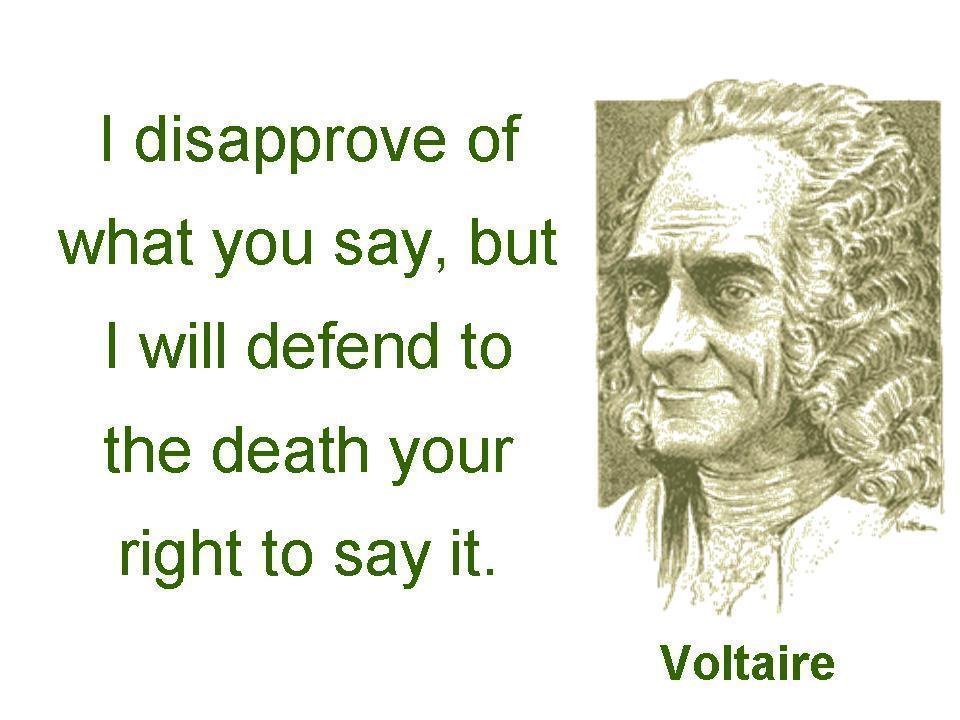
Words Will Change The World

Words have the power to transform the world we live in.
What we say has the potential to heal or harm.

With your loving words you can achieve impossible , bring a smile, nourish a broken heart and even bring hope and joy.
When so much can be achieved with just some beautiful words use their power to create beauty and harmony,use them wisely.

Thursday, March 29, 2012

Expert sees potential in S.J. for businesses


By Reed Fujii
Record Staff Writer
March 01, 2012 12:00 AM
STOCKTON - Revving up San Joaquin County's economic engine, particularly its existing transportation and distribution assets, was the focus Wednesday as area business development officials gathered to hear from an international logistics and site selection consultant.

Adam Wasserman, a principal of Global Logistics Development Partners of Scottsdale, Ariz., said the county was "an interesting location," at the fulcrum of the growing Central Valley and close to the Bay Area.

It has two major north-south freeways, two major railroad intermodal centers, Stockton Metropolitan Airport and the Port of Stockton.

"You sit on an inland waterway right here, and there are a lot of people very excited about the potential of what it can do," Wasserman said.

The pending opening of the marine highway, on which barges would shuttle container cargo between the Port of Oakland on the bay and inland ports in Stockton and West Sacramento, is a model for similar projects nationwide.

One now under study is the M5 Highway, a proposal to move cargo by ship along the West Coast instead of by truck along Interstate 5.

"The San Joaquin proposal is sort of a forerunner to that," Wasserman said.

But there are still many questions about whether marine shipping could compete with trucking and whether private investors will pay to find out.

"It's going to be tough," he said.

It took a federal transportation grant to underwrite the Stockton-Sacramento-Oakland marine highway project.

In addition, there are changes occurring in global transportation and challenges to overcome.

The U.S. lacks a coherent trade and transportation policy, particularly one aimed at bolstering economic growth instead of simply raising cargo volumes, Wasserman said. Such policies are a major focus, however, for trading nations from the Old World to emerging economies such as Vietnam, he said.

"They're outspending us; they're outthinking us," he said.

Another example is the Panama Canal expansion project, expected to double its capacity by 2014. It likely will redirect cargo from the ports of Los Angeles and Long Beach, in particular, to landings on the Gulf Coast, in Florida or even on the East Coast. Canada and Mexico, too, have designs on attracting cargo flows away from the United States.

It will take a continued effort for San Joaquin County to attract and accommodate new businesses in such a dynamic, global market, he said.

"You have a lot of the right ingredients, but it's not going to happen naturally," Wasserman said.

The global trade expert Wednesday toured parts of San Joaquin County and addressed a lunch meeting of the Business Team San Joaquin, a group organized by Fran Aguilera of San Joaquin County Worknet and Michael Ammann of the San Joaquin Partnership.

Team members include economic development officials from Stockton, Tracy, Lodi, Manteca and Lathrop, the county, the partnership and the Lodi Chamber of Commerce.

"We're trying to project this regionwide attunement to development," Ammann said.

On Tuesday, Wasserman was one of a half-dozen consultants addressing a forum in Sacramento organized by TeamCalifornia, a statewide group of economic development experts.

Tuesday, March 6, 2012

Ron Paul wins KSL(Utah) poll by a landslide!!

Videos to show You why you Should vote for Ron Paul

PROOF PEOPLE!!! HIS SUPPORTERS ARE COLLECTIVELY COMING TOGETHER~!!

Rick Santorum Tells AIPAC Obama ‘Turned His Back on the People of Israel’

Rick Santorum Tells AIPAC Obama ‘Turned His Back on the People of Israel’: CLEVELAND – Instead of shaking hands outside polling places in Ohio or Tennessee today, Rick Santorum warned a Super Tuesday audience at the American Israel Public Affairs Committee conference in Washington D.C., of the dangers of a nuclear Iran and accused President Obama of doing...

Quote for Today March 6th, 2012

"To some, Money Matters None." - oh zee 2012

Official defends 'lethal force' against US citizens

US Attorney General Eric Holder on Monday defended the government's use of "lethal force," even against American citizens abroad, as part of the effort to protect the nation against terror attacks.

The speech marked the first time a senior US official has publicly justified in legal terms the drone attacks that are believed to have killed at least three US citizens on foreign soil in recent months, including key Al-Qaeda figure Anwar al-Awlaqi.

"Given the nature of how terrorists act and where they tend to hide, it may not always be feasible to capture a United States citizen terrorist who presents an imminent threat of violent attack," Holder said in a speech at a law school in Chicago.

"In that case, our government has the clear authority to defend the United States with lethal force."

Holder said there were circumstances under which "an operation using lethal force in a foreign country, targeted against a US citizen who is a senior operational leader of Al-Qaeda or associated forces, and who is actively engaged in planning to kill Americans, would be lawful."

Such circumstances included that a thorough review had determined the individual posed "an imminent threat of violent attack against the United States" and that "capture is not feasible."

Thirdly, the "operation would be conducted in a manner consistent with applicable law of war principles," Holder told the audience at the Northwestern University School of Law.

"Some have called such operations 'assassinations.' They are not... assassinations are unlawful killings," Holder said.

"Our legal authority is not limited to the battlefield in Afghanistan... We are at war with a stateless enemy, prone to shifting operations from country to country," he added.

"Our government has both a responsibility and a right to protect this nation and its people from such threats." Civil rights groups have cried foul since the killing of Awlaqi in Yemen in September in a US raid.

Some argued it was illegal for the US military to kill an American citizen on the battlefield, following no attempt to indict him. US intelligence officials believed Awlaqi was linked to a US army major charged with shooting dead 13 people in 2009 in Fort Hood, Texas, and to a Nigerian student accused of trying to blow up a US airliner on December 25, 2009.

President Barack Obama said in September that Awlaqi's killing was a "major blow" to Al-Qaeda's Yemeni branch, and marked "another significant milestone in the broader effort to defeat Al-Qaeda and its affiliates."

The American Civil Liberties Union (ACLU) last month filed a lawsuit seeking the release of documents authorizing targeted drone strikes, such as the one on Awlaqi.

US citizen Samir Khan was killed in the same attack on Awlaqi, and Awlaqi's US-born teenage son was killed in October in a separate suspected US air strike in Yemen.

Sunday, March 4, 2012

Gas prices climb again, topping $3.76

NEW YORK (CNNMoney) -- The nationwide average for gasoline prices rose for the 26th straight day Sunday, topping the $3.76-a-gallon mark, according to the motorist group AAA.

The average price of regular unleaded gasoline climbed 0.7 cent in the latest 24-hour period. The price of gas is up from $3.47 a month ago and $3.69 a week ago. Last year at this time, gas was $3.49 a gallon.

The average price is 35 cents, or about 8.5%, lower than the record high of $4.114 set on July 17, 2008.

Average prices for regular gasoline top $4 a gallon in California, Alaska and Hawaii. At $4.38 a gallon, Hawaii ranks as the nation's high. Prices are within a nickel of the $4 mark in Connecticut, New York and Oregon, according to AAA.

Wyoming became the last state to reach the $3.20 mark, but still has the nation's lowest gas prices, about 3 cents a gallon lower than Colorado.
Gas prices have been rising on the back of soaring oil prices, which have surged 10% over the past month amid fears that tensions with Iran will lead to an all-out war that causes a disruption in oil supplies.

Signs of an improving economy have also boosted oil prices, as has the stock market. All three major indexes hit multi-year highs this week, and the S&P 500 (SPX) has risen by more than 8% in 2012.

But some economists worry that high gas prices could be the tipping point that brings on a new economic downturn. "I don't think for a minute consumer confidence levels can be sustained in the face of sustained high gas prices," said Bernard Baumohl, head of the Economic Outlook Group, a Princeton, N.J., research firm.

As gas prices soar, Republican presidential candidates have tried to tie President Obama's policies to the increase.

On Thursday, Mitt Romney said Obama "should be hanging his head" over his energy policies and accused the president of slowing domestic production. Romney advocated opening federal lands to drilling and easing regulations on fracking, a controversial policy that involves pumping water into rocks to harvest gas.

Also on Thursday, Obama delivered a speech in New Hampshire that stressed that domestic oil and gas production is at its highest point since 2003. But he also emphasized the need to develop new energy sources, as domestic production alone is not enough to keep up with U.S. demand.

The president called on Congress to end the $4 billion in subsidies to the oil industry so as to better incentivize companies to seek out clean-energy technologies.

Thursday, March 1, 2012

Valley News: Stockton's Bankruptcy Unlikely to Stop any Cuts

Valley News: Stockton's Bankruptcy Unlikely to Stop any Cuts: By John Rudolf Stockton, Calif., took a major step toward becoming the largest U.S. city ever to file for bankruptcy with a city counc...

Monday, February 27, 2012

America For Ron Paul

Sunday, February 26th, marked an exciting day for Ron Paul Supporters, when A new Coalition was formed, America For Ron Paul. Supporters of all ages, and ethnicity joined forces, in Mountain House, CA, amassing 4,000+ people in attendance. All of his loyal supporters were enjoying a day in America, with music, games, and speakers to entertain the large crowd. Ron Paul was not scheduled to show, he is struggling with the media, and the voter fraud that seems to be encompassing the nomination for the Republican Party.

Ron Paul Supporters look to convention

By Aaron Gould Sheinin

They are full-throated and full-throttle for the Texas congressman and Republican presidential hopeful.

Paul’s fans here are easy to spot and plan to stay busy through Super Tuesday. Though many aren’t traditionally associated with the Republican Party, their activities are common: sign waving in Cherokee and DeKalb counties, a rally in Marietta, a potluck dinner in Gwinnett. In cyberspace, Paul’s following is legion, and from Facebook and Twitter to Meetup.com, his supporters are voracious in their championing of the candidate.

Their attraction to the libertarian-leaning Paul is varied. Some love his record as a strict fiscal conservative who eschews tax increases and fights to lower the national debt. Others are drawn to his interest in moving the country’s currency back to the gold standard and still others love his foreign policy, which is centered around a withdrawal of most U.S. troops from around the world.

The same enthusiasm for Paul was there in 2008, when Paul also ran for president, yet he finished a distant fourth in the Georgia primary. This year, he again trails — polls show him in single digits — in the race for Georgia’s March 6 primary, but his supporters hope their influence in the state won’t end March 6.

Paul has a plan to remain relevant through the Republican National Convention this summer in Tampa. The blueprint goes beyond the primary to the GOP state convention in May, when Paul supporters will try to get themselves elected delegates to the national convention. If that happens, they could try to crash the party and force a floor fight for the GOP nomination.

In a strategy that’s being employed in other states, too, Paul’s Georgia supporters lay out the idea right on their website: “Take back the GOP from the ne’re-do-wells by becoming a Georgia GOP Delegate!” the site implores, complete with instructions on how to navigate the party’s rules.

Christopher Wall, a Johns Creek firefighter, is a Paul supporter seeking a ticket to Tampa.

“I’ll go as far as I can,” he said.

Wall, who will be a delegate to his county convention, said if the nomination comes down to a fight at the convention, anything can happen.

“It’s likely we’ll have a brokered convention,” he said.

Georgia’s Paul-backers are not alone. Paul has not campaigned in Georgia and is not expected to. Instead, he has focused on states that are awarding their delegates through caucuses, rather than primaries, because they are a higher payout for candidates who rely on grass-roots support.
To finish Reading this Article, Click Here!

Sunday, February 26, 2012

Moody's downgrades Stockton's credit

STOCKTON, CA - Moody's downgraded Stockton's credit-worthiness Friday to below investment grade, affecting nearly $341 million of debt.
The rating for Stockton's 2007 pension obligation bonds were downgraded to Ba3 and 2006 lease revenue bonds were downgraded to B1.
"Moody's rates over 12,000 municipalities in the United States. Fewer than 30 are currently rated non-investment grade (Ba1 or lower)," Moody's spokesperson David Jacobson said. "With yesterday's downgrade, Stockton is now rated Ba2. The most notable city on the same list is Detroit, which is currently rated Ba3 and is under review for a potential downgrade."
Moody's also downgraded the city's water enterprise rating to A3.
Moody's decision to downgrade Stockton's credit-worthiness comes after city officials said they will vote Tuesday on whether or not to start the 60-day meditation period required before filing for bankruptcy.
During the meditation process, the city would suspend payments to creditors and work with them on payments. Stockton City Manager Bob Dies proposed that payments only be suspended for the rest of the fiscal year and payments would be made through other revenue sources.
RELATED STORY: Official: Bad money moves, bad luck got Stockton in trouble
Moody's Senior Vice President Eric Hoffmann said "the proposed suspension and entry into a mediation process demonstrates significantly reduced willingness, if not ability, to make full and timely debt service payments."
"The downgrade also reflects the city's indication that it is in the process of restating prior year audited financial results," Hoffmann added. "While this process is in its preliminary stages and only estimates have been released, the potential for restatement reduces the credibility of the city's financial reporting to date. The preliminary estimates released by the city indicate that adjustment to the city's fiscal 2010 audit report will likely be negative and material."
The highest rating is AAA.
"Moody's currently rates the state of California A1 with a stable outlook," Jacobson said. "California is our second lowest rated state. Illinois, rated A2, is the lowest."
Hoffmann said Stockton's credit rating could be further downgraded if the city files for bankruptcy.
Stockton city councilman Dale Fritchen and the Stockton police union have expressed concern over filing for bankruptcy.
"This will hurt Stockton, hurt my neighbors, my family, and my community," Fritchen said. "I'm putting everything in to make sure this doesn't happen."
In a statement, the union said the city is starting to work its way back financially, but filing for bankruptcy would be disastrous.
"Sales revenues are up and residents' confidence is coming back," the police union said in a statement. "Bankruptcy would send the city spiraling backward with no recovery in sight."
The union is calling for residents to show up at Tuesday night's council meeting and push for a public release of the city's budget.
News10/KXTV

contact us by email: g.pitsch.85@gmail.com

Submit Domain Name

Submitdomainname.com

This Is Port City: Recent Posts

Taxes News Headlines - Yahoo! News